Unlocking the Power of Language: A Deep Dive Into Natural Language Processing (NLP)
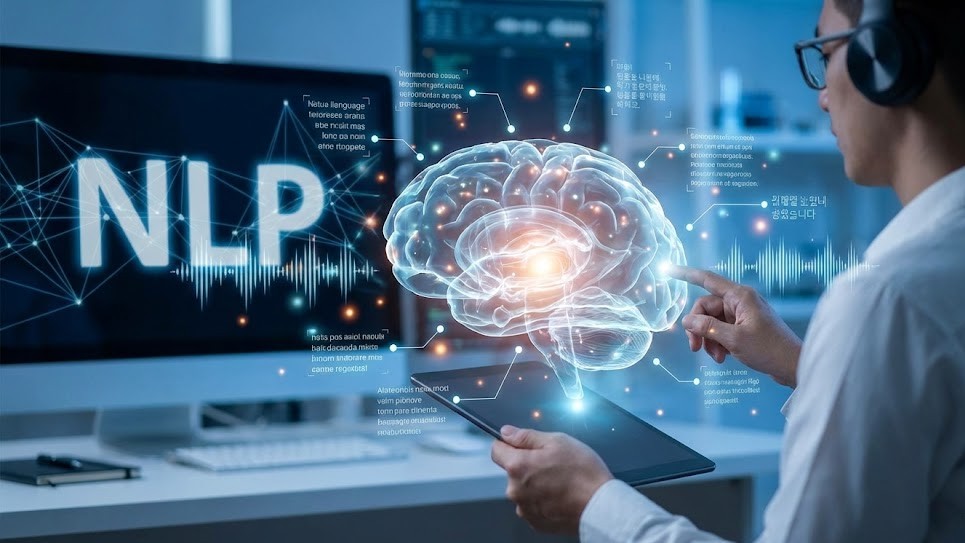
🌐 Introduction: When Computers Learn to Understand Us
Language is one of humanity’s most powerful tools. It carries our thoughts, emotions, cultures, and ideas. But for a long time, computers couldn’t understand it—at least not naturally.
Natural Language Processing (NLP) changed that.
NLP is the field of artificial intelligence that focuses on helping machines understand, interpret, and generate human language. From chatbots to translation apps to spam filters, NLP powers countless tools you use every day—often without even realizing it.
In this deep dive, we’ll explore what NLP is, how it works, its key techniques, challenges, and real-world applications, and where the future of this fascinating field is headed.
🤖 What Exactly Is NLP?
Natural Language Processing sits at the intersection of:
-
Linguistics – the structure and rules of language
-
Computer science – algorithms and data structures
-
Machine learning – pattern recognition and prediction
In simple terms:
NLP enables computers to understand and generate human language in a meaningful, useful way.
Whether it’s Siri answering your questions, Google summarizing long articles, or your email app filtering spam—NLP is working behind the scenes.
🧠 How NLP Works: The Building Blocks
Behind the simplicity of “Hey Google” lies a complex pipeline. Here are the essential steps of NLP:
1. Text Preprocessing
Before a machine can understand text, it needs a clean version of it.
-
Tokenization – splitting text into words or sentences
-
Normalization – lowercasing, removing punctuation, correcting spelling
-
Stemming/Lemmatization – reducing words to base forms (“running” → “run”)
-
Stop-word removal – removing common words like “the,” “is,” “and”
Preprocessing helps algorithms focus on what really matters.
2. Feature Extraction
Machines need numbers, not words. Feature extraction converts text into numerical representations.
Common methods include:
-
Bag of Words (BoW)
-
TF–IDF (Term Frequency–Inverse Document Frequency)
-
Word embeddings (Word2Vec, GloVe)
-
Contextual embeddings (BERT, GPT, transformer models)
These techniques capture meaning, relationships, and context.
3. Model Training
Machine learning or deep learning models learn patterns such as:
-
Sentiment (positive/negative)
-
Topics
-
Entities (names, dates, locations)
-
Likelihood of word sequences
Modern NLP heavily uses transformers, the architecture behind GPT and BERT.
4. Evaluation and Optimization
Accuracy, F1-score, BLEU score, perplexity—these metrics help evaluate how well a model understands language and where improvements are needed.
🧰 Core NLP Techniques
📚 Tokenization
Breaking text into meaningful units.
📌 Named Entity Recognition (NER)
Identifying real-world objects like people, organizations, or places.
💬 Sentiment Analysis
Understanding emotions behind text—widely used in social media analytics.
🔁 Machine Translation
Transforming one language into another (e.g., Google Translate).
📄 Text Summarization
Extracting essential information from long documents.
🤝 Dialogue Systems / Chatbots
Powering virtual assistants, customer service bots, and conversational AI.
📝 Text Generation
Creating coherent and contextual text—something large language models excel at.
🚧 Challenges in NLP
Despite major advances, NLP is far from perfect. Key challenges include:
1. Ambiguity
Human language is messy.
Example: “I saw her duck.” (Animal or movement?)
2. Sarcasm & Tone
Machines struggle with implied meaning.
Example: “Great job breaking the printer.”
3. Multilingual Complexity
Languages vary in grammar, structure, and idioms.
4. Real-World Context
Words depend heavily on context:
“Apple” (the fruit) vs. “Apple” (the company).
5. Bias in Training Data
Models learn from data—and data can contain stereotypes.
🌍 Real-World Applications of NLP
NLP is everywhere:
💡 Customer Support
Automated chatbots, smart FAQ systems, virtual agents.
📱 Smartphones & Voice Assistants
Siri, Alexa, Google Assistant use NLP for voice commands and responses.
📰 Content Creation
Automated writing, proofreading tools like Grammarly, summarizers.
📈 Business Intelligence
Analyzing thousands of customer reviews instantly.
🧠 Healthcare
Extracting insights from clinical records and medical literature.
🔒 Cybersecurity
Detecting phishing attempts through language patterns.
🎓 Education
AI tutors, automated grading, language learning apps.
The possibilities continue to expand.
🚀 The Future of NLP
We are currently in the transformer era, but the next frontier is emerging:
1. Multimodal AI
Models that understand text, images, audio, and video together.
2. More Human-Like Conversation
LLMs already generate human-like text; future systems will understand deeper context, emotion, and intent.
3. Real-Time Universal Translation
Instant, accurate translation across all languages.
4. Ethical & Explainable NLP
Reducing bias, increasing transparency, and building trustworthy AI systems.
5. Personal AI Assistants
Truly personalized agents that understand your writing, preferences, and goals.
The future of NLP is not just technical—it’s personal, global, and transformative.
✨ Conclusion
Natural Language Processing is revolutionizing how humans interact with technology. From decoding emotions to writing articles to enabling global communication, NLP plays an increasingly central role in our digital lives.
As AI evolves, NLP will continue unlocking new possibilities—making technology not only smarter but more human.
Comments (0)
Login to leave a comment.
No comments yet. Be the first!